← Back to all defeats

Johnny Clark

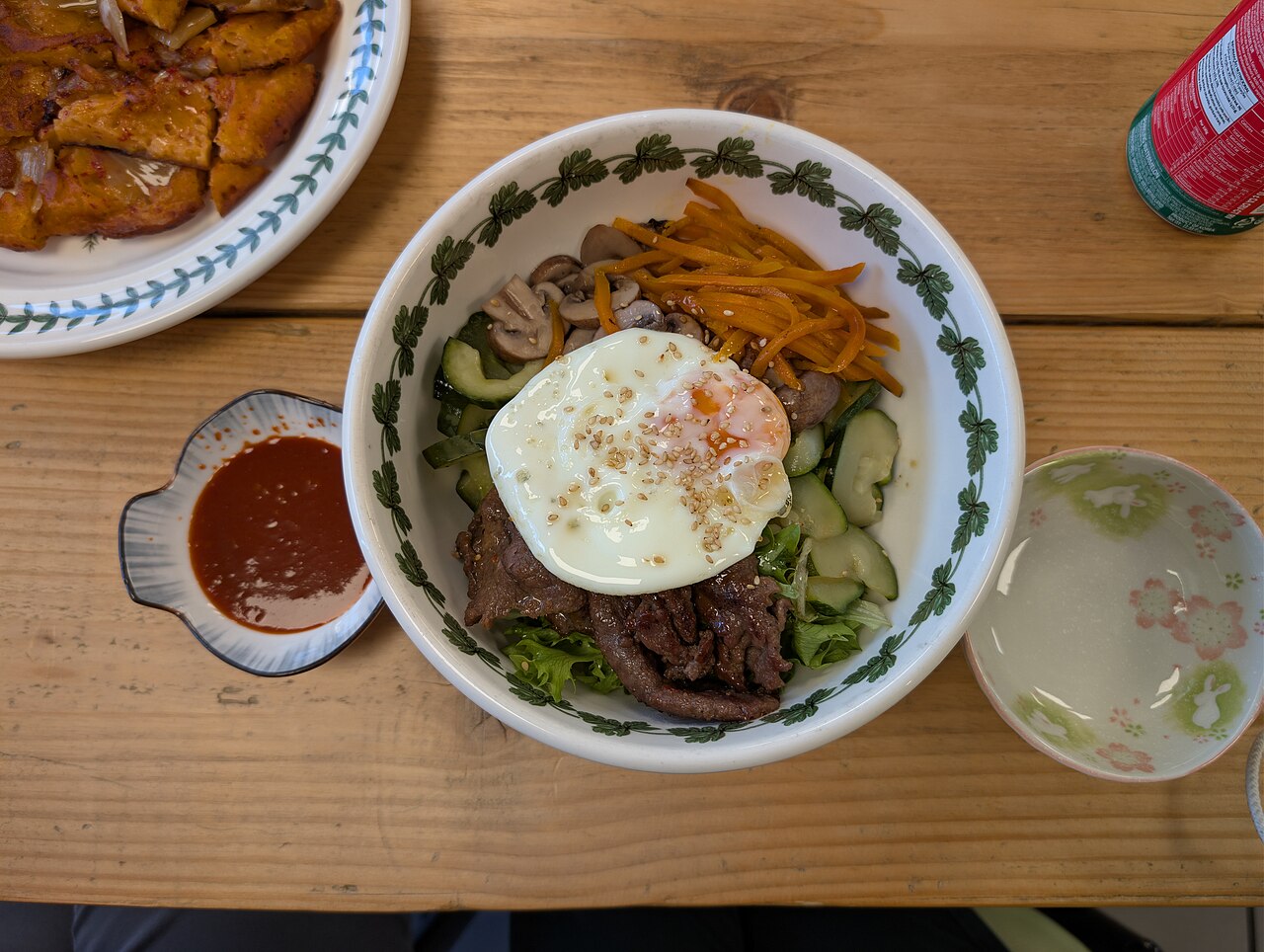
Bibimbap
S33E4 Korean · 2023

Johnny Clark runs Parachute — one of the most important neighborhood restaurants in Chicago — and also Anelya, which is a Ukrainian restaurant that opened during a war and is doing things with Eastern European food that nobody expected from a chef who made his name with snacks and cheese puffs. He also, in S33E4, beat Bobby Flay at bibimbap, which is a dish far outside his primary idiom and a demonstration of what serious cooks do with serious technique.

Clark's rice crust strategy differs from the standard approach: he uses short-grain rice cooked slightly wetter than the recipe suggests, knowing the additional moisture will drive off in the hot dolsot and leave a stickier, more cohesive crust. His gochujang-based sauce is thinned with a small amount of mirin before service, which keeps it from seizing when it hits the hot stone. The egg white is partially set before the yolk breaks — he covers the bowl for thirty seconds, then removes the lid.

Parachute is a Chicago institution. Anelya is something Chicago is still figuring out how to talk about. Bobby Flay's bibimbap was something the judges figured out in about ten seconds.

More from Japanese & Korean →

Bibimbap

25 min Prep
35 min Cook
4 Serves
  • 2 cups short-grain sushi rice
  • 2.5 cups water
  • 3 tbsp rice vinegar
  • 1 tbsp sesame oil, divided
  • 8 oz beef sirloin, thinly sliced against the grain
  • 3 tbsp soy sauce, divided
  • 2 tbsp mirin
  • 4 cloves garlic, minced, divided
  • 2 cups fresh spinach
  • 2 medium carrots, julienned
  • 1 cup shiitake mushrooms, thinly sliced
  • 4 large eggs
  • 2 tbsp gochujang (Korean red chili paste)
  • 1 tbsp sugar
  • 2 scallions, chopped
  • 2 tbsp sesame seeds, toasted
  1. Rinse rice under cold water until water runs clear. Combine with 2.5 cups water in a pot, bring to boil over high heat, then reduce to low, cover, and simmer for 18 minutes. Remove from heat, let stand covered for 5 minutes. While rice cooks, whisk together rice vinegar, 1.5 tbsp sesame oil, and 1 minced garlic clove in a large bowl.
  2. Marinate beef sirloin in a bowl with 1.5 tbsp soy sauce, mirin, and 1.5 minced garlic cloves for 10 minutes. Heat 1 tbsp sesame oil in a skillet over high heat until smoking, then sear beef for 3-4 minutes until medium-rare. Transfer to a plate.
  3. In the same skillet, sauté carrots over medium-high heat for 2 minutes, then transfer to a separate plate. Add mushrooms with 1 minced garlic clove and 0.75 tbsp soy sauce, cook 4-5 minutes until golden. Transfer to another plate. Blanch spinach in boiling salted water for 45 seconds, drain thoroughly, and toss with remaining 0.75 tbsp soy sauce and 1 minced garlic clove.
  4. Stir warm rice into the vinegar mixture until fully coated and slightly cooled. Divide rice evenly among four bowls, creating a shallow well in the center of each.
  5. Arrange beef, carrots, mushrooms, and spinach in distinct sections on top of rice in each bowl, alternating colors in a pinwheel pattern.
  6. Fry 4 eggs sunny-side up in a clean skillet over medium heat until whites are set but yolks remain runny, approximately 3-4 minutes. Place one egg in the center of each bowl.
  7. Whisk gochujang with sugar and 1 tbsp water until smooth. Drizzle a small amount of gochujang sauce around the egg yolk in each bowl, then sprinkle with scallions and toasted sesame seeds.
  8. Serve immediately and instruct diners to mix thoroughly with a spoon before eating, ensuring each spoonful contains rice, vegetables, beef, and gochujang sauce.
Inspired by Johnny Clark’s winning bibimbap. This is a plausible recreation, not the chef’s original recipe.
← PreviousRachel Klein Next →Josh Gale